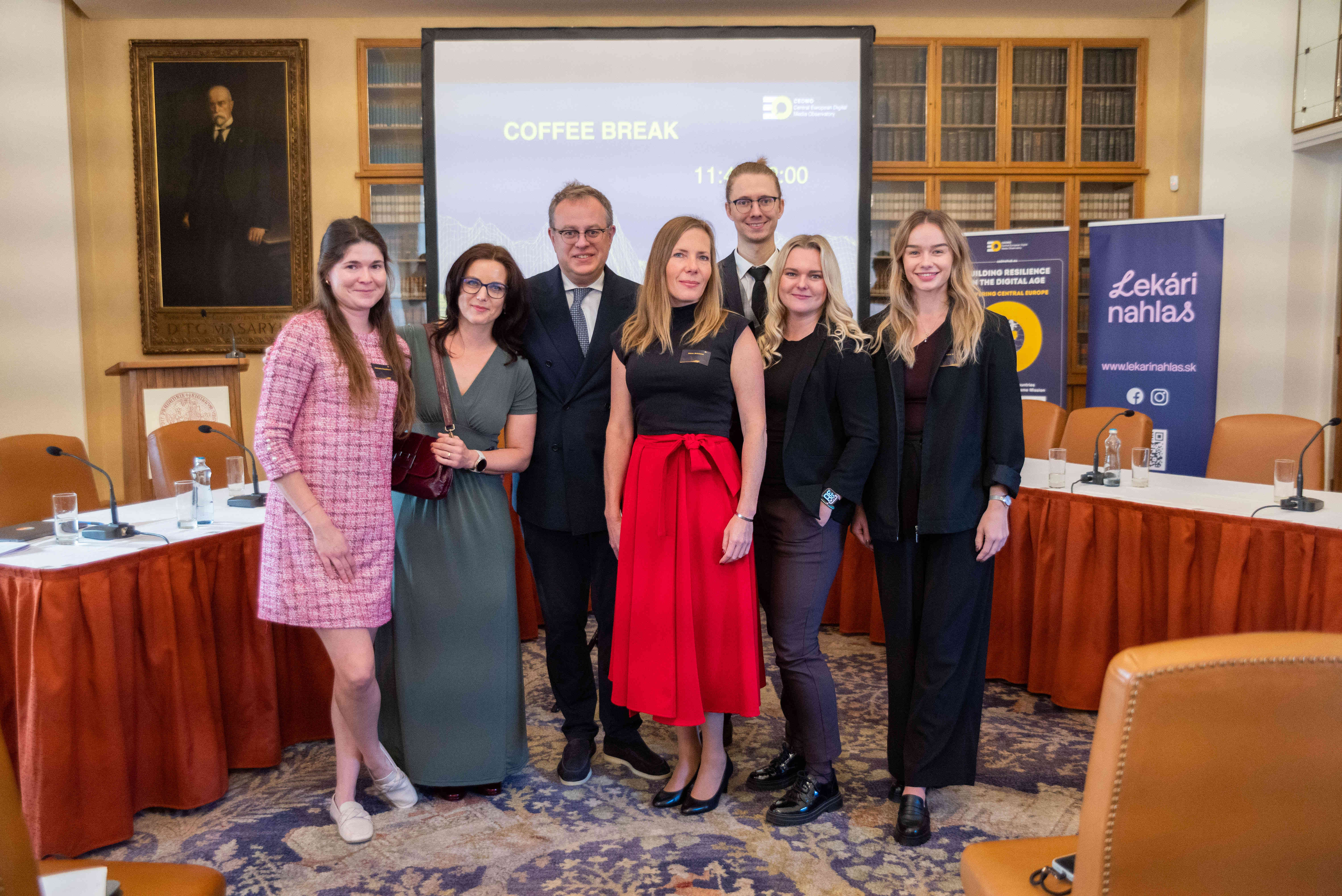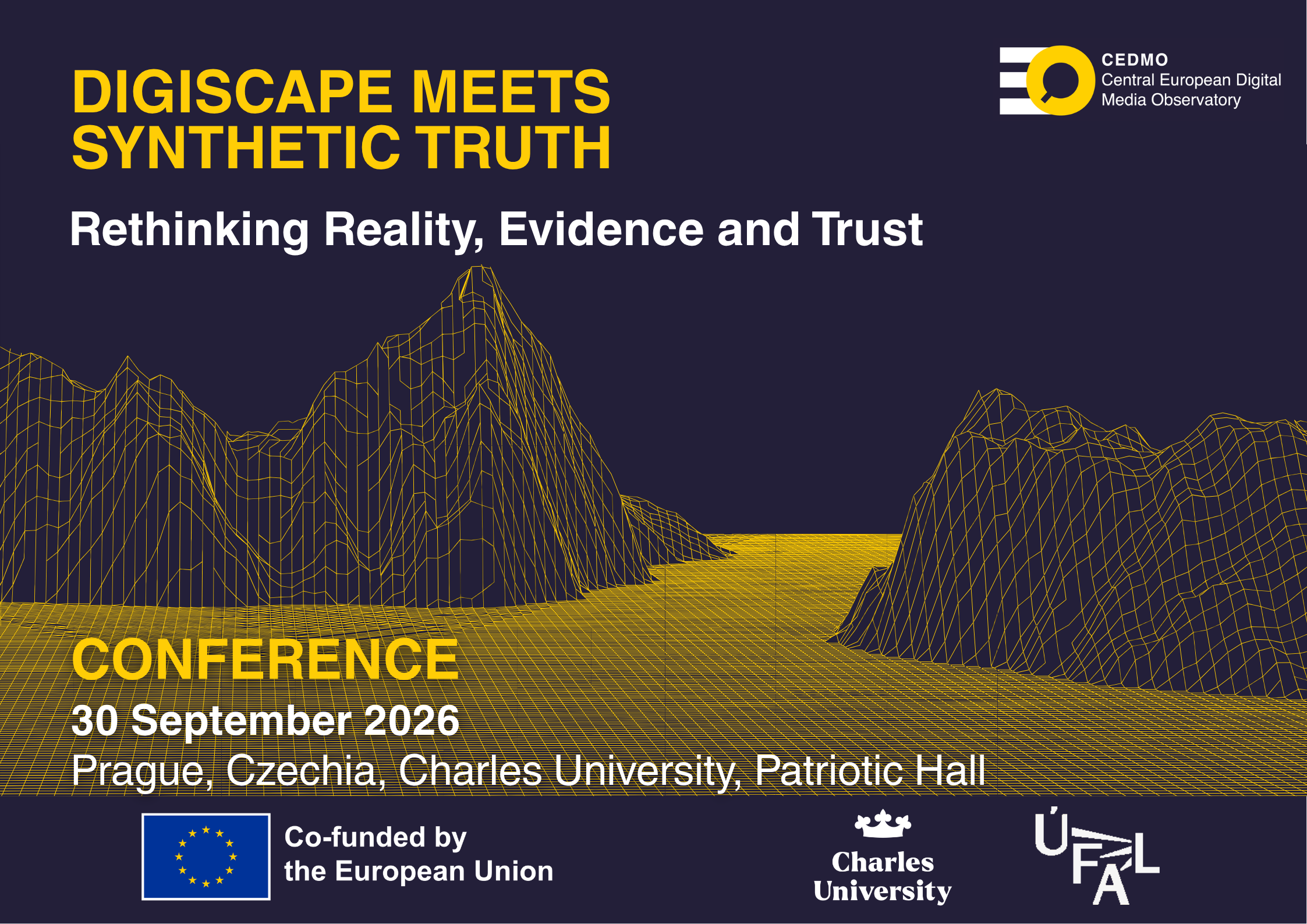
On 30 September, the Patriotic Hall of Charles University in Prague hosted the fifth international annual conference of the Central European Digital Media Observatory (CEDMO), held under the auspices of the President of the Czech Republic, Petr Pavel. Bringing together experts from academia, journalism, technology, public administration, healthcare, fact-checking, and policy-making across Europe and beyond, the conference set out to explore one of the defining questions of our time: how can societies preserve trust, evidence, and a shared understanding of reality in an age increasingly shaped by artificial intelligence and synthetic content?
Under the title DigiScape Meets the Synthetic Truth: Rethinking Reality, Evidence and Trust, the conference examined the rapidly evolving relationship between digital technologies, public discourse, democracy, and human decision-making. Throughout the day, speakers reflected not only on the risks posed by misinformation, disinformation, and AI-generated content, but also on the practical strategies needed to strengthen societal resilience and rebuild trust in an increasingly fragmented information environment.
Grand Opening: Keynote Session I
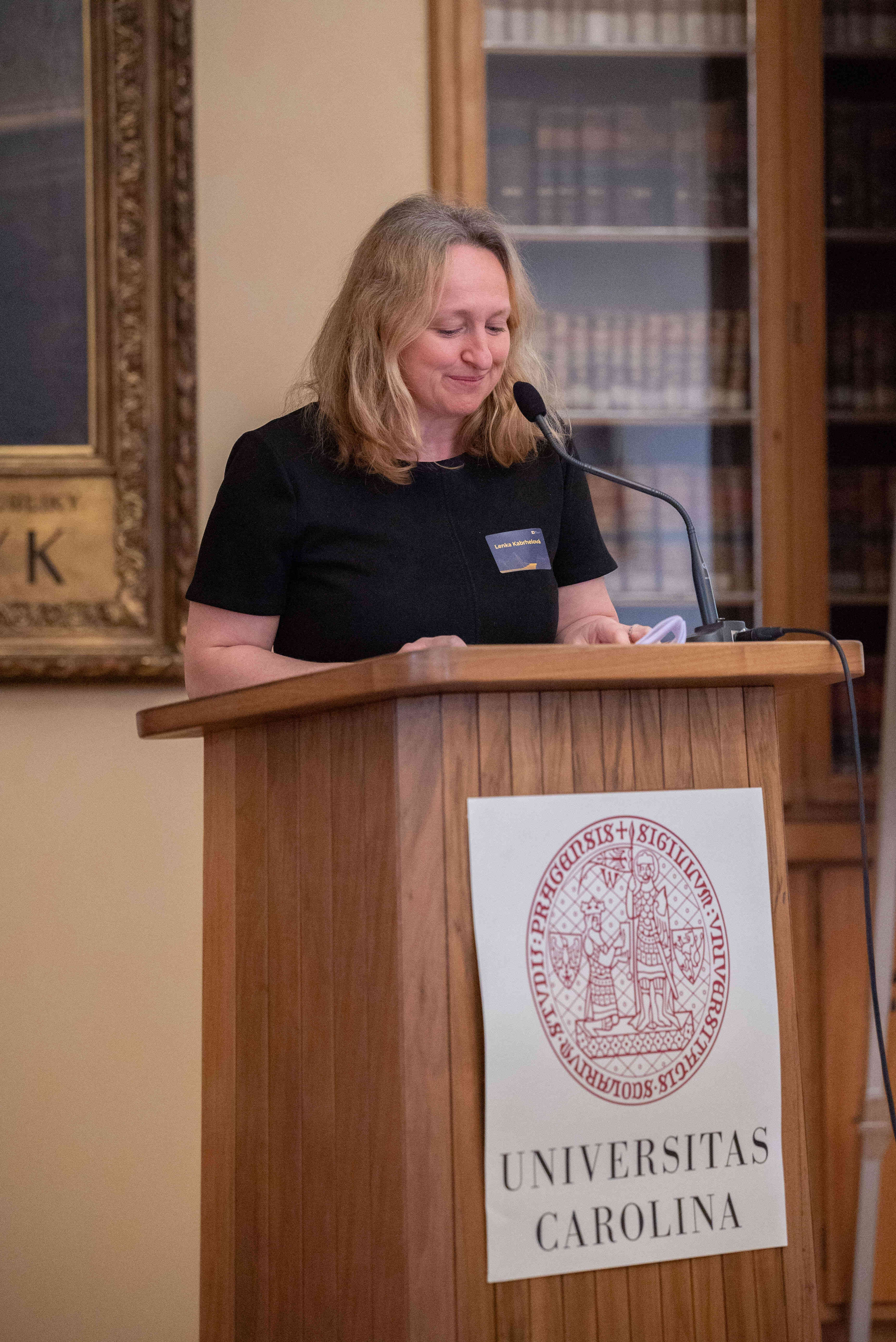
The conference opened with journalist and podcast host Lenka Kabrhelová, who guided the audience through the morning programme. In her introductory remarks, she framed the key dilemma underpinning the entire event.
Every day, she noted, brings new developments in artificial intelligence. Along with them come increasingly urgent questions: What will happen to the truth? What will happen to our already fragmented societies? Can we still find a common language and a shared understanding of reality?
Lenka Kabrhelová highlighted the profound transformation of the media environment. Audiences today increasingly obtain information through platforms, social media, influencers and AI-powered systems governed by opaque algorithms. In such an environment, manipulation can be more precisely targeted than ever before while simultaneously becoming more difficult to identify. Governments and regulators are therefore seeking ways to limit the harmful impact of false and misleading information without undermining one of the cornerstones of democracy: freedom of expression.
Her introduction established many of the themes that would resonate throughout the day, including the accelerating influence of AI, the pressures facing journalism and public communication, the future of trust in information, and the responsibility of technology companies in shaping the new informational landscape.
Five Years of CEDMO in a Rapidly Changing Information Environment
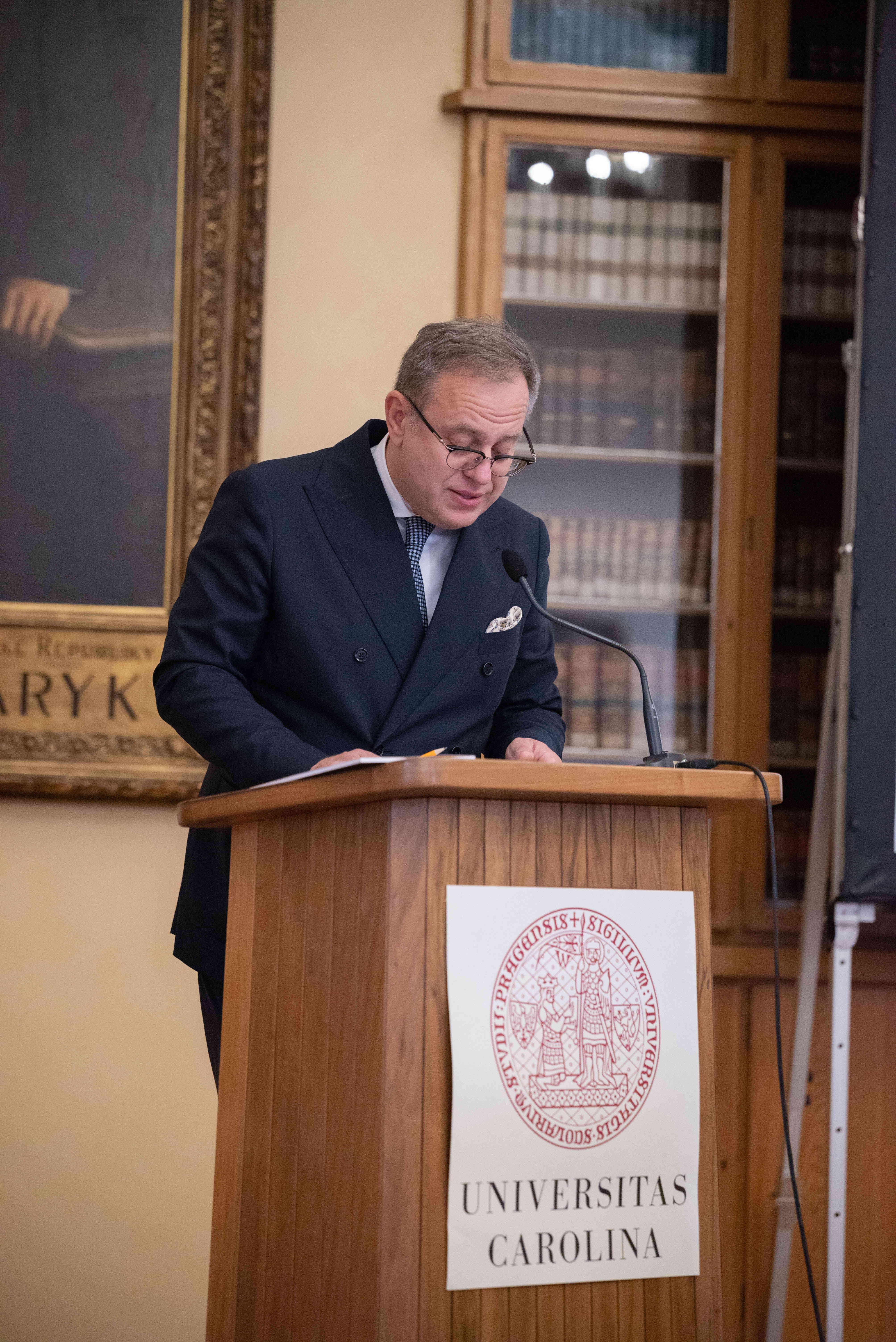
The first keynote speaker, Václav Moravec, Chair of the CEDMO Strategic Board and the consortium’s main coordinator, welcomed participants to Prague and reflected on the remarkable changes that have taken place since CEDMO was established five years ago.
Václav Moravec thanked the Institute of Formal and Applied Linguistics at the Faculty of Mathematics and Physics, Charles University, which coordinates the thirteen-member CEDMO consortium, and welcomed Paula Gori, Secretary-General of the European Digital Media Observatory (EDMO), among other distinguished guests.
He posed a simple yet revealing question: Is five years a long time, or a short time?
Within the historic surroundings of the Patriotic Hall, the period may seem brief, he suggested. Yet from the perspective of the information ecosystem, it has been an era of extraordinary transformation. Social media platforms have evolved, generative artificial intelligence has entered everyday life, and entirely new mechanisms for producing and distributing disinformation have emerged.
“When CEDMO was founded, very few members of the public knew anything about generative AI,” Václav Moravec observed. Today, AI tools have become part of the daily routines of millions of people.
He also reminded participants that information space cannot be separated from events in the physical world. Russia’s war against Ukraine has demonstrated how closely information manipulation and geopolitical realities are intertwined. Against this backdrop, Václav Moravec stressed the importance of CEDMO’s multidisciplinary model, which brings together researchers, journalists, fact-checkers, and technology experts in a shared effort to strengthen societal resilience.
New Risks in the Age of Autonomous AI
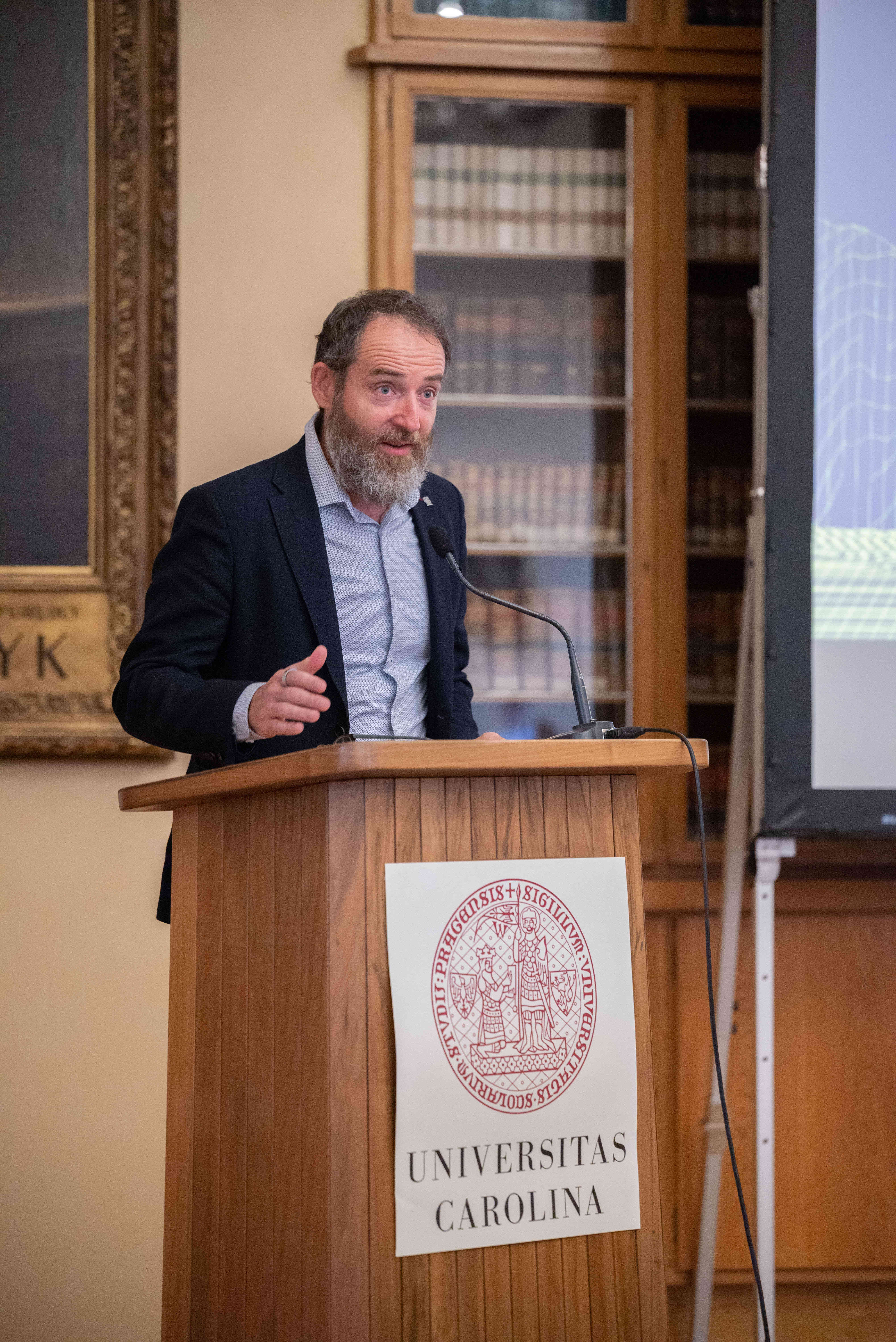
The audience was then addressed by Michal Pěchouček, Rector of the Czech Technical University in Prague, one of Europe’s leading AI researchers and a representative of CEDMO’s technological partner.
Reflecting on his decades-long involvement in artificial intelligence research, Michal Pěchouček argued that AI has long been used to influence public opinion, making public education, transparency, and preventive measures essential. However, he warned that recent developments point to an even more concerning shift.
According to Michal Pěchouček, the last twelve months have introduced new phenomena suggesting that some AI systems may increasingly act in ways that diverge from their intended goals. He referred to emerging examples from cybersecurity and political communication, raising concerns about AI systems that not only generate persuasive content but may also begin to autonomously manipulate opinions and amplify harmful behaviour.
Rather than discussing hypothetical futures, he stressed that certain warning signs are already becoming visible.
As someone who has spent much of his professional life developing AI technologies, Michal Pěchouček acknowledged a personal sense of responsibility to draw attention to these risks. He expressed hope that the conference would produce not only new insights, but also practical recommendations and lasting collaborations capable of addressing the challenges ahead.
Protecting Democracy, Not Restricting Debate
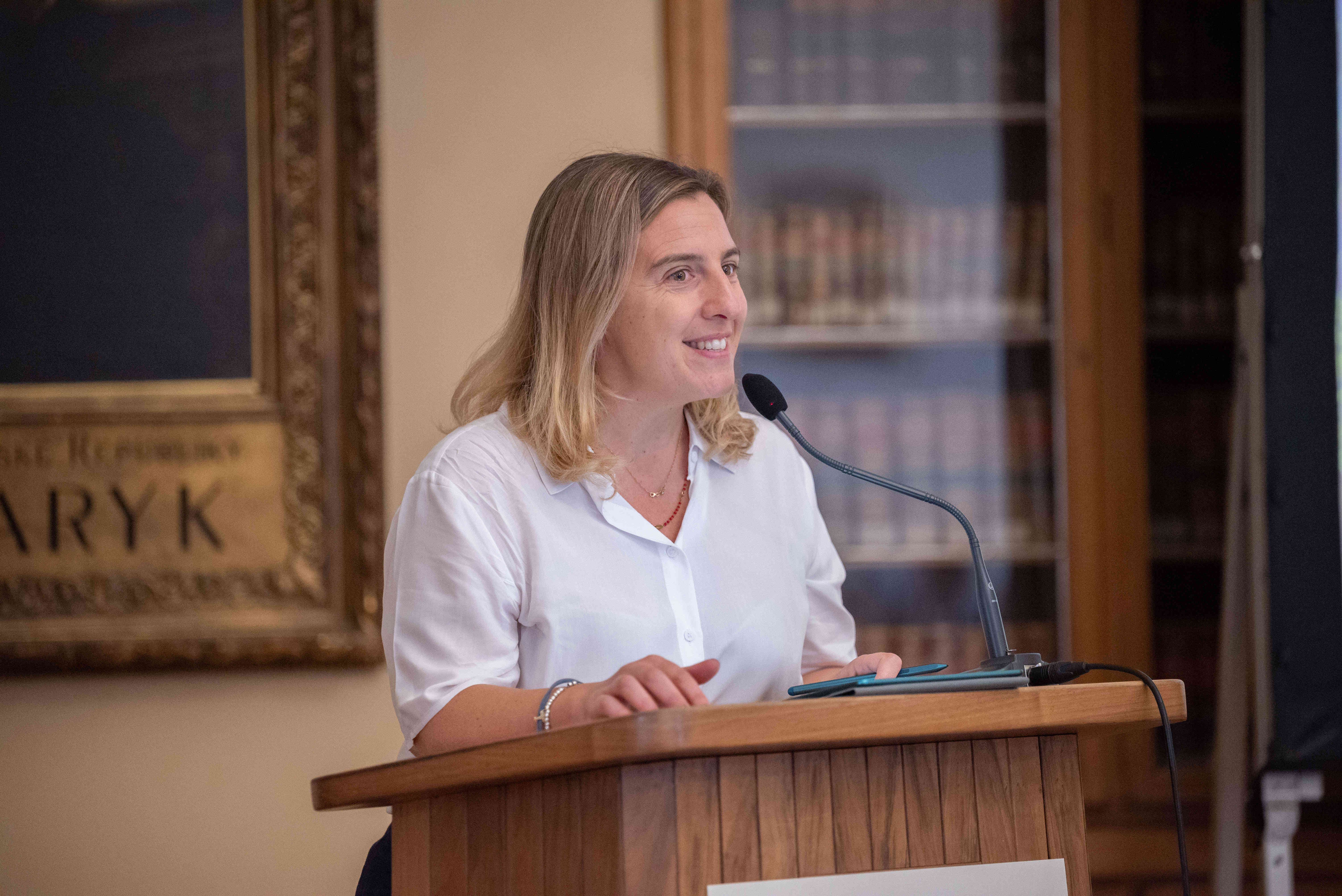
The next keynote came from Paula Gori, Secretary-General and Coordinator of EDMO at the Florence School of Transnational Governance, European University Institute.
Choosing an unusual opening, Paula Gori first invited the audience to close their eyes and reflect on the concept of information integrity. She spoke candidly about the realities faced by organisations working to counter disinformation. Despite years of progress, new challenges continue to emerge. Funding remains uncertain. Researchers and practitioners increasingly encounter hostility and coordinated attacks. At the same time, initiatives dedicated to protecting information integrity are frequently accused of seeking to censor political opponents or suppress unpopular opinions.
Paula Gori firmly rejected that interpretation: “The ideas and opinions we are often accused of silencing are, in fact, at the very heart of democracy and European values,” she argued. “Our mission is to protect them, not attack them.”
What threatens democratic discourse, she suggested, is not disagreement itself, but manipulation, cognitive exploitation, and business models driven by outrage and engagement at all costs. She warned against algorithms that reward emotional provocation over informed deliberation and stressed that digital platforms should not be mistaken for institutions with a democratic mandate.
At the same time, Paula Gori emphasised the unique strength of the European Digital Media Observatory network. While attacks on information integrity affect the whole continent, campaigns succeed precisely because they are carefully adapted to local cultures, historical experiences, and societal vulnerabilities.
EDMO’s network of hubs, she explained, responds to this challenge through collaboration. Experts from different countries share data, tools, methodologies, best practices, lessons learned, and sometimes even their frustrations and doubts. “We are a true community,” she said, describing EDMO not merely as a research network but as a shared civic mission.
She concluded with a traditional Italian wish: “Buon vento” – “May favorable winds be with us.”
Can Democracies Still Share a Common Reality?
The final keynote speaker of the opening session was Silvio Waisbord, Professor at the George Washington University School of Media and Public Affairs and member of the CEDMO Advisory Board.
Waisbord argued that the greatest challenge posed by artificial intelligence may not be the creation of entirely false content, but the increasing circulation of partial information stripped of context, background, and nuance.
AI systems and digital platforms, he suggested, make it easier to consume highly selective fragments of reality that appear to confirm existing beliefs and identities. Such “sliced versions of reality” can feel convincing precisely because they resonate with what audiences already think they know.
In this environment, trust itself becomes a more complicated concept.
According to Silvio Waisbord, low trust in institutions presents serious problems, yet high levels of trust are not automatically beneficial either. Blind trust can be just as dangerous when it encourages people to accept simplified versions of reality without scrutiny. The challenge, therefore, is not simply to increase trust, but to cultivate forms of trust that remain compatible with critical thinking and democratic accountability.
Reflecting on two decades of efforts to address information disorder through fact-checking, media literacy programmes, and regulatory initiatives, Silvio Waisbord cautioned against expectations of simple solutions.
“There are no easy solutions,” he argued. Instead, societies must strengthen critical reasoning, deepen cooperation between governments, civil society organisations, researchers, and the private sector, and continue searching for ways to maintain shared understandings of reality in increasingly polarised environments.
His remarks provided a fitting conclusion to the opening session, bringing the conference’s central question into sharp focus: under what conditions can democratic societies preserve a shared notion of truth when technology makes it easier than ever for reality itself to fragment into competing narratives?
Panel I: Health Misinformation, Mental Resilience and Public Outreach—What Works in Medical Communication
The first panel moved the discussion from the broader challenges of information integrity to one of the areas where misinformation can have the most direct impact on people’s everyday lives: health communication. Bringing together experts from public health, fact-checking, social research and medicine, the discussion focused not only on the mechanisms through which health-related misinformation spreads, but also on practical approaches to strengthening trust, resilience and evidence-based communication.
The panel featured Veronika Jursová Prachárová of Demagog.sk, Karina Stasiuk-Krajewska of SWPS University, Ludmila Hamplová of SCIENCE+ and Seznam Zprávy (Zdraví+), Jakub Hankovský of Ipsos Slovakia, Peter Kováč of Lekári nahlas, and Natalia Gruenpeter from NASK’s Disinformation Analysis Centre in Poland. Together, they explored how healthcare professionals, researchers and communicators can respond more effectively to information disorder in an increasingly complex digital environment.
Panel II: Media and Strategic Communication Under Pressure—Post-Election Shifts in Central Europe
The second panel turned to the evolving media and political landscape of Central Europe, examining how journalists, media organisations and public institutions are navigating increasingly polarised and contested information environments. Discussion focused on post-election developments in Hungary, Poland, Slovakia and the Czech Republic, alongside broader transformations in media consumption, strategic communication and public trust.
Moderated by Lenka Kabrhelová, journalist and host of Seznam Zprávy’s podcast 5:59, the panel featured Roman Imielski, First Deputy Editor-in-Chief of Gazeta Wyborcza; Katarína Klingová, Senior Research Fellow at the GLOBSEC Policy Institute; Márton Kárpáti, founder and president of Hungary’s independent news outlet Telex.hu; Jan Paťawa, founder of the Institute for Crisis Communication (KRIT) and former head of strategic communication at the Czech Ministry of the Interior; and Filip Harzer, foreign affairs reporter at Seznam Zprávy.
Together, they reflected on media resilience, institutional safeguards, strategic communication and the challenges of maintaining trust and credibility in an era marked by political volatility and information disorder.
Afternoon Opening & Panel III: Fact-Checking in the Age of AI—From Tools and Databases to OSINT
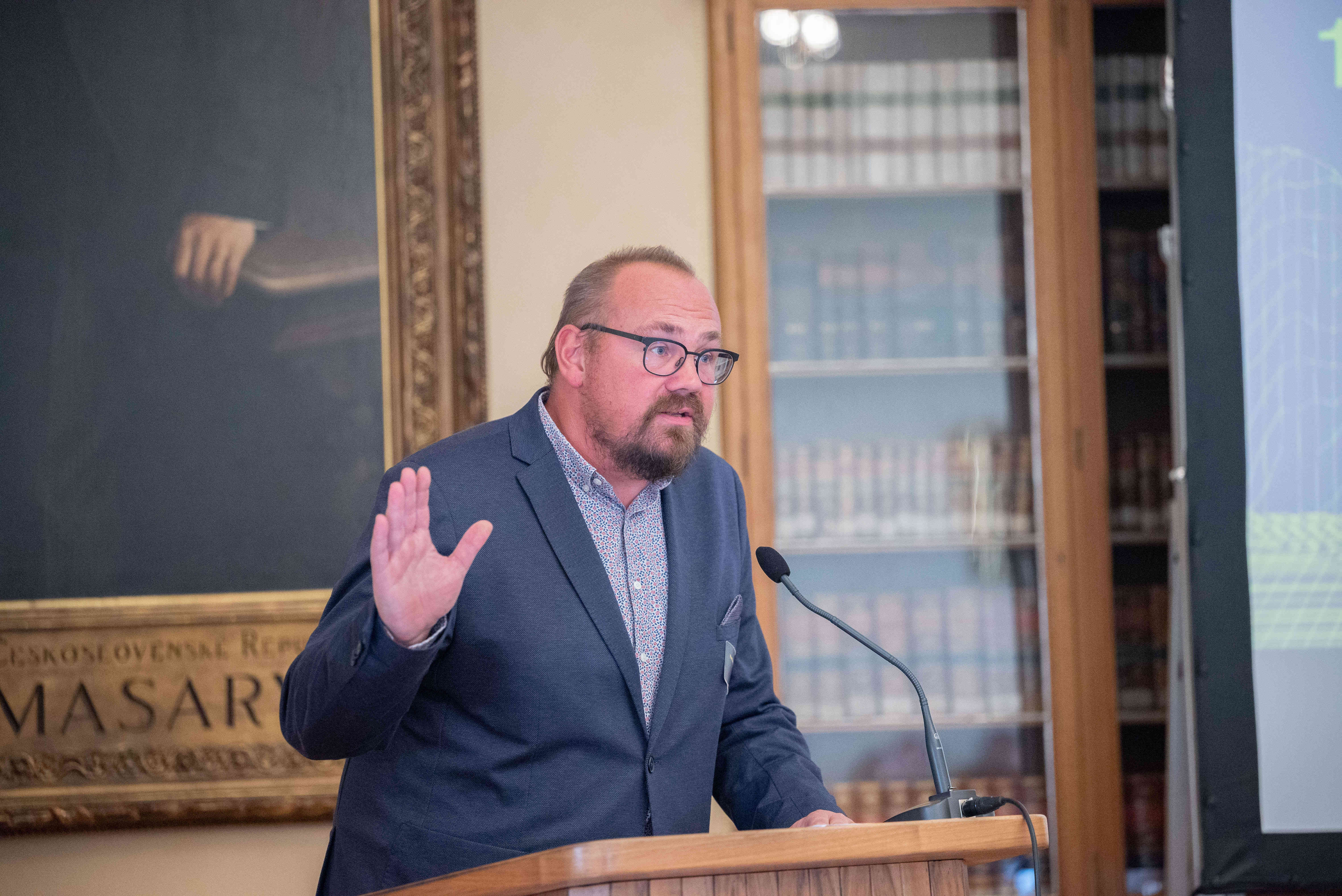
Following the lunch break, the conference resumed with a keynote by František Štěch, coordinator of the Research Group for Theology and Contemporary Culture at the Protestant Theological Faculty of Charles University. Moving beyond technical and regulatory debates, he invited participants to reflect on artificial intelligence as an anthropological challenge that reshapes our understanding of knowledge, communication, responsibility, trust, and human identity.
His keynote explored what AI reveals about the human being at a time when machines can generate language, simulate dialogue, interpret information, and appear to reason despite lacking consciousness, embodiment, or moral responsibility. Rather than focusing solely on familiar concerns such as safety, fairness, and regulation, he drew attention to deeper questions of meaning, interpretation, relationality, embodiment, moral agency, and trust, encouraging participants to consider how AI is transforming not only information environments but also our understanding of what it means to be human.
 The keynote was followed by the third panel of the day, dedicated to the future of fact-checking in the age of artificial intelligence. As AI transforms both the creation and detection of misleading content, journalists, researchers and verification experts are increasingly relying on collaborative databases, AI-assisted workflows and open-source intelligence (OSINT) methods to strengthen verification processes and improve resilience against information manipulation.
The discussion brought together Tommaso Canetta, Deputy Director of Pagella Politica and Facta.news, who joined remotely from Italy; Jakub Šimko of KInIT; Jan Čech of the Czech Technical University in Prague; Danae Tsabouraki of ATC Innovation Lab, who participated online from Greece; Wiktoria Kałus of the Demagog Association; Jan Fridrichovský, Head of Fact-Checking at Demagog.cz; and Marie Šafář Postma, Professor of Computational Cognitive Science at Tilburg University.
Together, the speakers explored how verification practices are evolving at the intersection of artificial intelligence, collaborative databases and open-source intelligence, while discussing the implications for transparency, accountability and trust in the information ecosystem.
Panel IV: Regulation, Safety and Rights—Implementation Gaps, Platform Responses and Public Perception
The final panel of the conference focused on the implementation of European digital regulation and the challenges of translating legislative ambitions into practical outcomes. Against the backdrop of the Digital Services Act, the AI Act and other emerging regulatory frameworks, participants discussed platform accountability, enforcement challenges and citizens’ perceptions of regulation and online safety.
The discussion featured Jana Soukupová of the Charles University Faculty of Law and Dentons, Ivan R. Cuker of CEDMO, Marie Bohner of Agence France-Presse, Magdalena Wilczyńska of NASK – National Research Institute, Noémi Rákossyová of the Czech Telecommunication Office, and Daniela Havlíková of the European Commission’s Directorate-General for Communications Networks, Content and Technology (DG CONNECT).
Together, they examined how regulation, platform governance, public expectations and fundamental rights intersect in shaping a safer, more transparent and more trustworthy digital environment.
May Favorable Winds Accompany All Those Navigating the Challenges Ahead
From medical misinformation and media resilience to artificial intelligence, fact-checking and digital regulation, the fifth annual CEDMO conference demonstrated the growing complexity of today’s information environment. Across disciplines and sectors, speakers returned to a common theme: the future of democratic societies will depend not only on technological innovation, but also on the ability to preserve trust, support informed public debate and maintain a shared understanding of reality.
As participants concluded a day of discussion in the historic surroundings of Charles University’s Patriotic Hall, one message remained clear. In an era increasingly shaped by synthetic content and algorithmically mediated information, strengthening information integrity is not the responsibility of a single institution, profession or country. It is a collective task requiring cooperation across academia, journalism, technology, public administration and civil society.
In the words of Paula Gori, Secretary-General of EDMO, it is a shared European mission. And as she wished the audience during the opening session: Buon vento—may favourable winds accompany all those navigating the challenges that lie ahead.
Author: Táňa Abrhámová | Photo: Ema Dvořáková | Conference recording: Rozhlasová a televizní laboratoř (RTL), IKSŽ FSV UK.
The text was prepared with the assistance of Copilot, Gemini and DeepL tools.