About CEDMO
The Central European Digital Media Observatory (CEDMO), as an independent non-partisan multidisciplinary hub, aims to identify, research and prioritise the most critical sources and causes of information disorders in Central Europe (mainly the Czech Republic, Slovakia and Poland). This international consortium was created to propose a set of short and longer-term actions, as well as recommendations to help civil society, public institutions and the private sector respond to the declining trust in key institutions and help society to resist the effect of increasing exposure to mis- and disinformation.
By interacting and coordinating with European Digital Media Observatory (EDMO) and other regional EDMO hubs in EU, CEDMO will contribute to curbing threats posed by information disorders, including disenchantment with the democratic processes, and discord in civil society in Europe, and to building community and nation-wide resilience while protecting information ecosystems.
About CEDMO
The Central European Digital Media Observatory (CEDMO), as an independent non-partisan multidisciplinary hub, aims to identify, research and prioritise the most critical sources and causes of information disorders in Central Europe (mainly the Czech Republic, Slovakia and Poland). This international consortium was created to propose a set of short and longer-term actions, as well as recommendations to help civil society, public institutions and the private sector respond to the declining trust in key institutions and help society to resist the effect of increasing exposure to mis- and disinformation.
Our Partners





About CEDMO
The Central European Digital Media Observatory (CEDMO), as an independent non-partisan multidisciplinary hub, aims to identify, research and prioritise the most critical sources and causes of information disorders in Central Europe (mainly the Czech Republic, Slovakia and Poland). This international consortium was created to propose a set of short and longer-term actions, as well as recommendations to help civil society, public institutions and the private sector respond to the declining trust in key institutions and help society to resist the effect of increasing exposure to mis- and disinformation.
Our Partners





“Media: One of #Zelensky’s bodyguards brought his chief’s visit to the #US to a vibrant conclusion starting a fight in a bar not far from the UN office because the visitors didn’t want to shout out after him ‘Glory to Ukraine,'” says a September 26, 2023 X post shared by the Russian embassy in South Africa.

“We will never impose unnecessary and heavy-handed measures on you, the British people. We will still meet our international commitments and hit Net Zero by 2050,” Sunak said in a tweet (archive) on September 20, 2023, marking a major climate announcement.

“OOPS: Billboard in New York accidentally greets Zelenskyy with ‘Glory to Urine’ instead of ‘Glory to Ukraine,'” said a September 21, 2023 post sharing the 6-second clip on X, the site formerly known as Twitter.
“OOPS: Billboard in New York accidentally greets Zelenskyy with ‘Glory to Urine’ instead of ‘Glory to Ukraine,'” said a September 21, 2023 post sharing the 6-second clip on X, the site formerly known as Twitter.

“OK, we need only one statistic to prove the Earth is not too hot for humans,” Moore says in an August 1, 2023 post on Twitter, which is being rebranded as “X.”
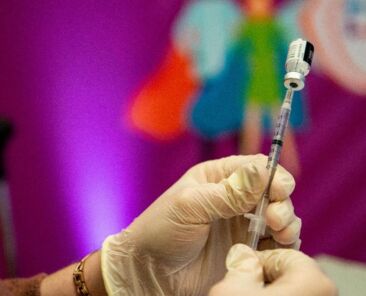
“BREAKING: 86% of children suffered an adverse reaction from the COVID vaccine, according to Pfizer clinical trials,” says a July 15, 2023 tweet from Leading Report, which AFP has previously fact-checked for spreading misinformation.